Sketty is a neighbourhood whose leafy streets, independent shops and handsome Victorian buildings offer few immediate clues to its long and varied past. Today, the village is perhaps best recognised by the familiar crossroads on Gower Road, the spire of St Paul's Church and the mixture of older houses and residential streets that surround them. Yet beneath the appearance of a modern Swansea suburb lies a history stretching back hundreds of years, shaped by agriculture, religion, industry and some of the most influential families in South Wales.
The origins of the name Sketty, or Y Sgeti in Welsh, have long been a subject of debate. One explanation connects it with Ynys Ceti, traditionally interpreted as "Ceti's Island", although the Welsh word ynys can also describe land beside a river or stream. Another theory associates it with Is Maen Ceti, meaning "below Ceti's Stone", a possible reference to the Neolithic burial chamber known as Arthur's Stone on Cefn Bryn in Gower.
However, an intriguing piece of place-name research points towards an earlier and possibly more convincing explanation. The name appears in a record from 1319 as Enesketti, suggesting a combination of the Welsh word ynys, meaning land beside a river, and the personal name Cetti. Rather than referring to the distant prehistoric monument, it may originally have described a piece of riverside land belonging to someone named Cetti. The word ynys appears with a similar meaning in other Welsh place names, including Ynyscynon and Ynysllwchwr, while the personal name Cetti can also be found in Cilgeti (Kilgetty) in Pembrokeshire.
Over the centuries, the name evolved through several recorded forms, including le Skette in 1400, Skety in the seventeenth century and Yscetty in 1867. Although the identity of Cetti remains unknown, the early medieval spelling lends weight to this interpretation. It also raises questions about the supposed connection with Arthur's Stone, situated some ten miles away on Cefn Bryn, since numerous other settlements across Gower could equally claim to lie below the monument. While the precise origin of Sketty's name remains open to interpretation, these early records offer a fascinating glimpse into its medieval past.
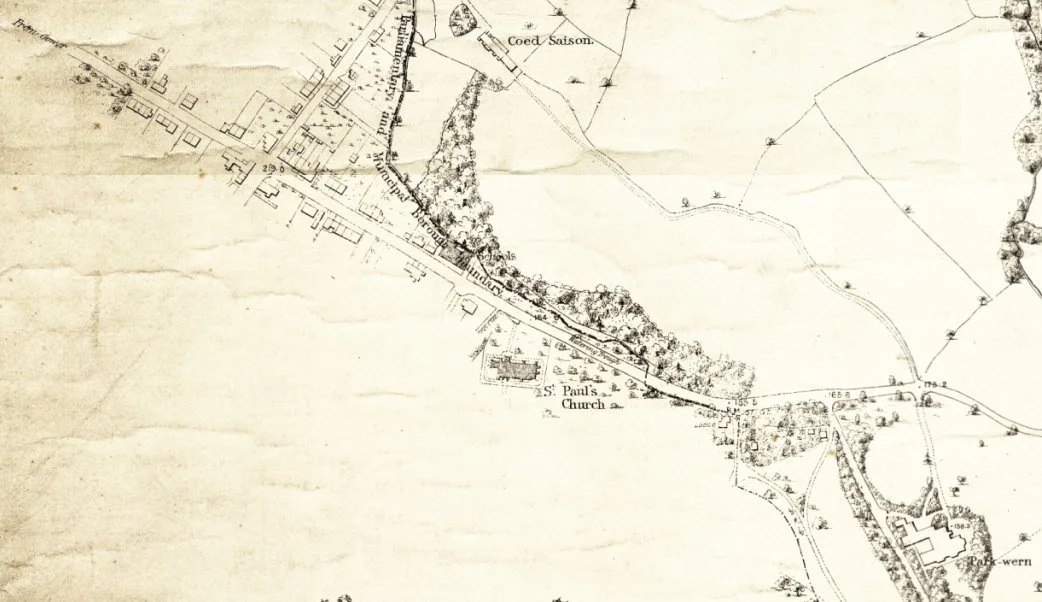
A document dated 9 July 1400 also provides a fascinating glimpse into Sketty's medieval landscape. Concerning a grant of land in Gower by King Henry IV, it describes an established road leading from Swansea's West Street towards Sketti and onwards to Blakepulle (Blackpill). This formed part of an old inland route connecting Swansea with Oystermouth, passing through what was then largely open countryside, long before the familiar roads and residential streets of modern Sketty had taken shape.
For centuries, Sketty remained a small rural settlement, surrounded by fields, woodland and scattered farms. It lay within the ancient parish of St Mary's in Swansea, although some distance beyond the medieval town itself. The surrounding countryside was crossed by old tracks, streams and agricultural boundaries, many of which would eventually disappear beneath roads and houses.
The old crossroads, where Gower Road meets Vivian Road and Dillwyn Road, became the centre of village life. While the surrounding area was still predominantly agricultural, this junction provided an important meeting point on the route between Swansea and the communities further west.
By the eighteenth century, however, changes were beginning to take place that would transform both Sketty and Swansea itself.
As Swansea developed into one of Britain's great industrial centres, wealthy merchants and industrialists began acquiring land to the west of the town. The copper industry in particular brought extraordinary wealth to the area, earning Swansea the nickname Copperopolis. Although the furnaces and factories were concentrated largely along the Lower Swansea Valley, many of their owners preferred to make their homes among the fields and wooded hillsides around Sketty.
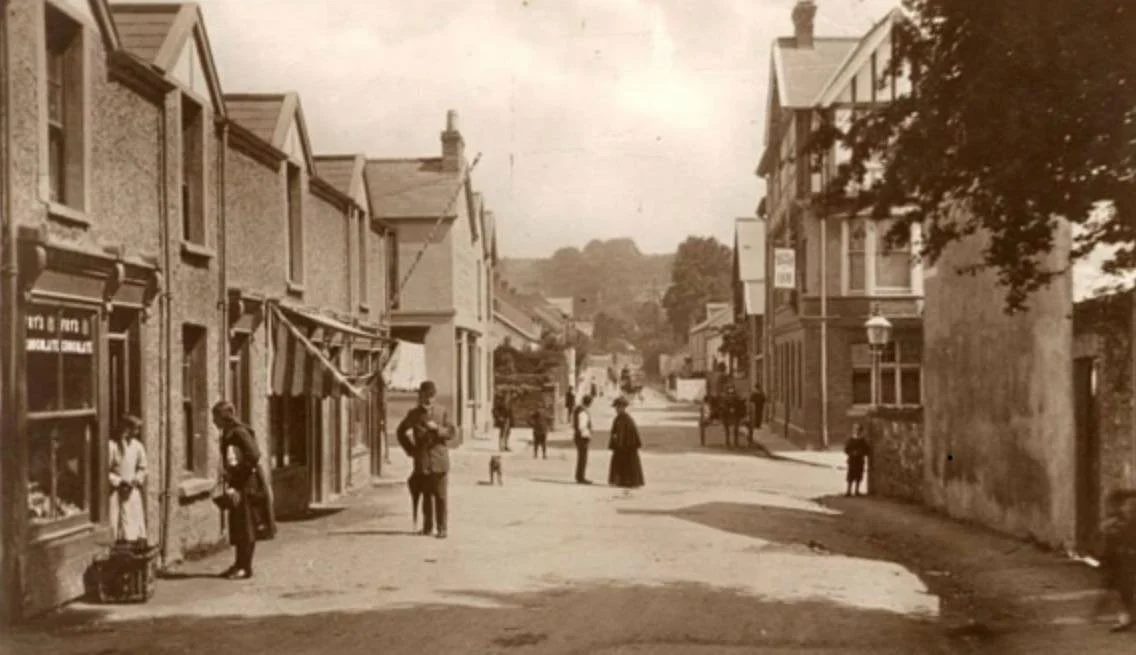
Among the most influential of these families were the Vivians, whose fortunes were closely tied to the copper industry at Hafod.
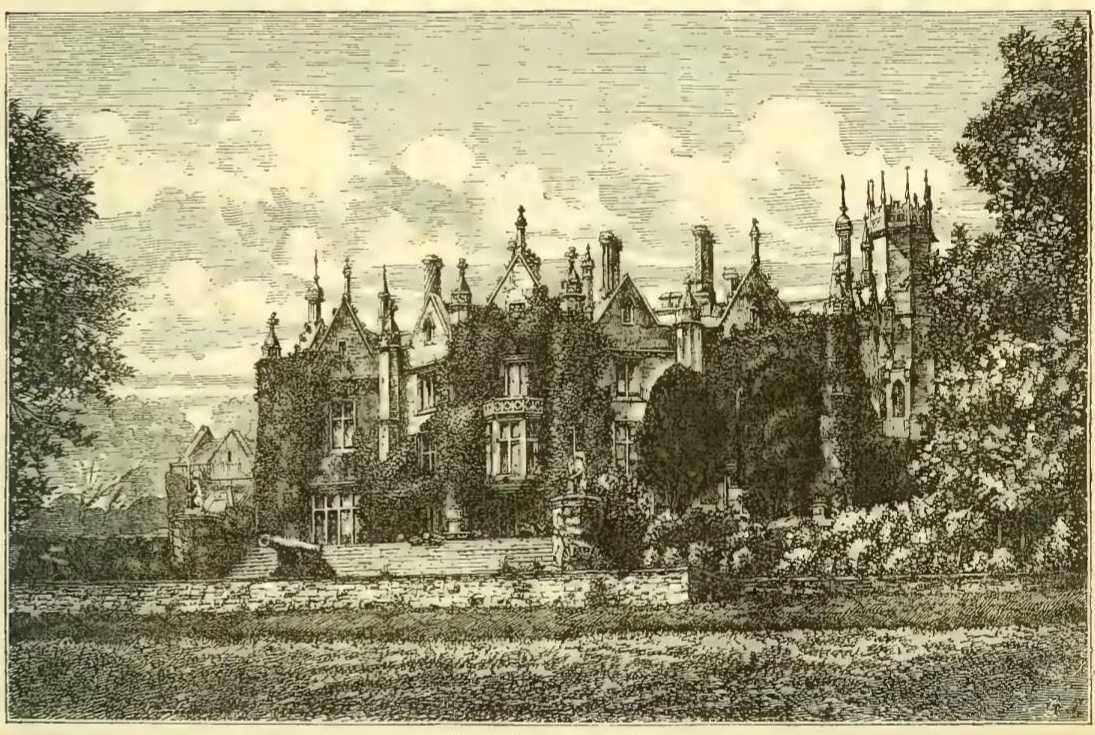
In 1817, John Henry Vivian acquired a substantial estate centred on a relatively modest country house known as Marino. The property had been built in the 1780s for Edward King, a Swansea customs official, to designs by local architect William Jernegan. Its unusual octagonal form was very different from the grand mansion that would eventually occupy the site.
Vivian set about transforming the property, initially enlarging the original house before commissioning architect Peter Frederick Robinson to undertake a much more ambitious reconstruction during the 1820s and 1830s.
The result was Singleton Abbey, an imposing Tudor-Gothic mansion surrounded by landscaped grounds, ornamental gardens, woodland and sweeping views towards Swansea Bay.
Despite its name, Singleton Abbey was never a religious building. The name was simply a fashionable reflection of its Gothic architecture.
The estate eventually extended across hundreds of acres, incorporating farmland, woodland, lodges, gardens and other buildings. Robinson was also involved in designing several structures within the grounds, including the distinctive Swiss Cottage, completed in 1826, which remains one of Singleton Park's most unusual landmarks.
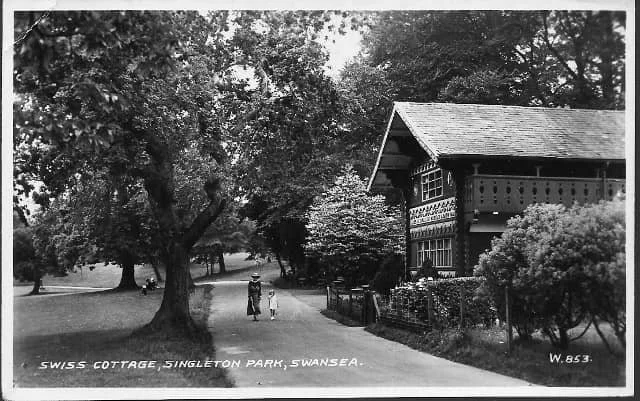
The Vivian family's influence extended well beyond their own estate. Their wealth helped finance schools, churches and civic improvements, and their presence had a lasting effect on the character and development of Sketty.
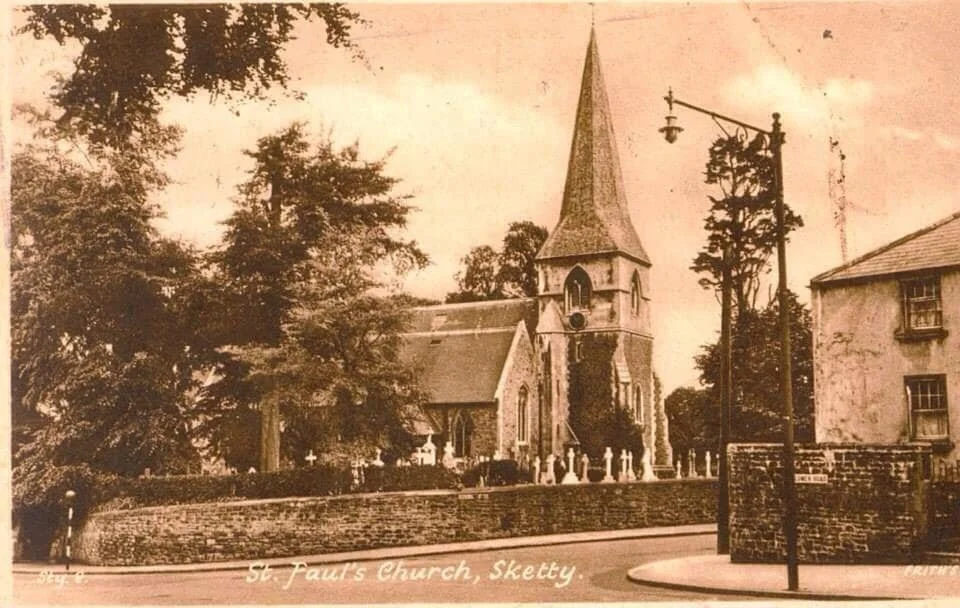
One of the most important buildings associated with the family is St Paul's Church, whose tall spire remains a prominent feature of Gower Road.
The church was built in 1849–50 to designs by the nationally recognised Gothic Revival architect Henry Woodyer. It was erected by the Vivian family in memory of Jessie Vivian, the first wife of Henry Hussey Vivian, who had died in 1848 following childbirth.
Consecrated on 27 September 1850, St Paul's became the parish church of the newly established parish of Sketty in 1851, having previously formed part of the much larger parish of St Mary's in Swansea.
The original church was considerably smaller than the building we see today. As Sketty's population grew, extensions were carried out during the late nineteenth and early twentieth centuries, including major additions in 1908 and 1929.
Inside the church, the Vivian family's influence is still evident. The memorial chapel contains an elaborate white marble sculpture of Jessie Vivian by Italian artist Pietro Tenerani, while stained-glass windows and other memorials reflect the wealth and importance of the families who helped establish the church.
Across Gower Road stands another reminder of the village's Victorian development: the former Sketty National School, now known as the Stewart Hall.
Built in 1853, also to designs by Henry Woodyer, the school provided education for local children at a time when formal schooling was becoming increasingly important. Its attractive Gothic architecture closely complements that of St Paul's, and the two buildings remain among the most recognisable surviving features of Victorian Sketty.
Yet religious and community life in Sketty did not begin with the arrival of the Anglican church.
The history of nonconformist worship in the village stretches back to the late eighteenth century, when two local farmers, John Harries and Benjamin Davies, established a small meeting house where services were conducted in Welsh.
As the congregation grew, a larger chapel became necessary. In 1842, Bethel Welsh Congregational Church opened on Carnglas Road, complete with a burial ground and accommodation for horses belonging to worshippers travelling from the surrounding countryside.
The chapel was an important part of the village's Welsh-speaking community, reflecting a time when Welsh remained widely used in the area.
As Sketty expanded and its English-speaking population increased, a separate English Congregational chapel was established at Sketty Green in 1884.
Methodism also developed a strong presence in the village. The foundation stone of a new Wesleyan Methodist chapel was laid by Henry Hussey Vivian in 1875, and the building opened on 11 December 1876, replacing an earlier chapel further up Gower Road.
These churches and chapels played a much wider role than simply providing places of worship. They were centres of education, social gatherings, charitable activities and community life, helping to create a stronger sense of identity within the growing village.
While the Vivians were perhaps the most prominent family associated with Sketty, they were far from the only wealthy household to leave their mark on the area.
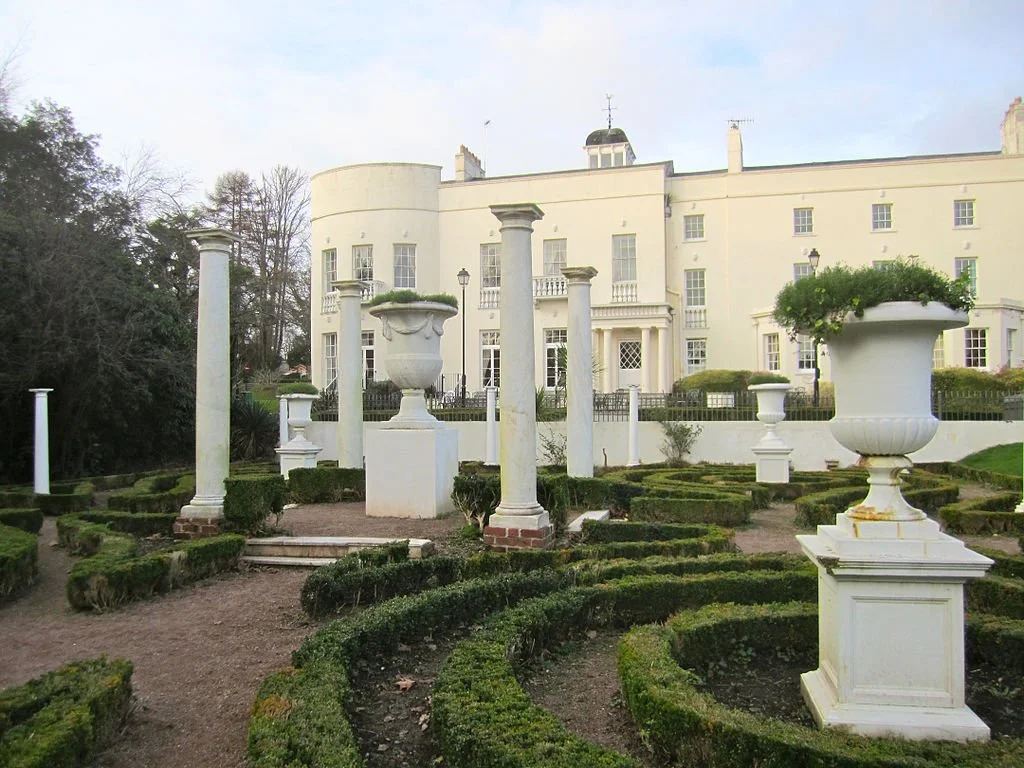
Sketty Hall, situated on the northern edge of what is now Singleton Park, has origins reaching back to the early eighteenth century. Originally known as New Hall, the house was gradually enlarged and altered by successive owners, including the Mansel family, Ralph Sheldon and Charles Baring.
In 1831, it was purchased by Lewis Weston Dillwyn, the industrialist, naturalist and owner of Swansea's Cambrian Pottery. He commissioned further alterations to the building, strengthening its association with another of Swansea's most significant families.
Later in the nineteenth century, Sketty Hall became the home of Richard Glynn Vivian, the wealthy art collector whose collection helped establish the Glynn Vivian Art Gallery in Swansea.
After purchasing the house in 1898, Glynn Vivian introduced Italian-inspired architectural features and ornamental gardens, transforming its appearance once again.
The Dillwyn family's influence was also felt further west, at Hendrefoilan.
In 1853, Lewis Llewelyn Dillwyn, the son of Lewis Weston Dillwyn, commissioned the construction of Hendrefoilan House. Designed by William B. Colling, the impressive Gothic mansion stood on the site of an earlier farmhouse and reflected the family's growing wealth and political influence.
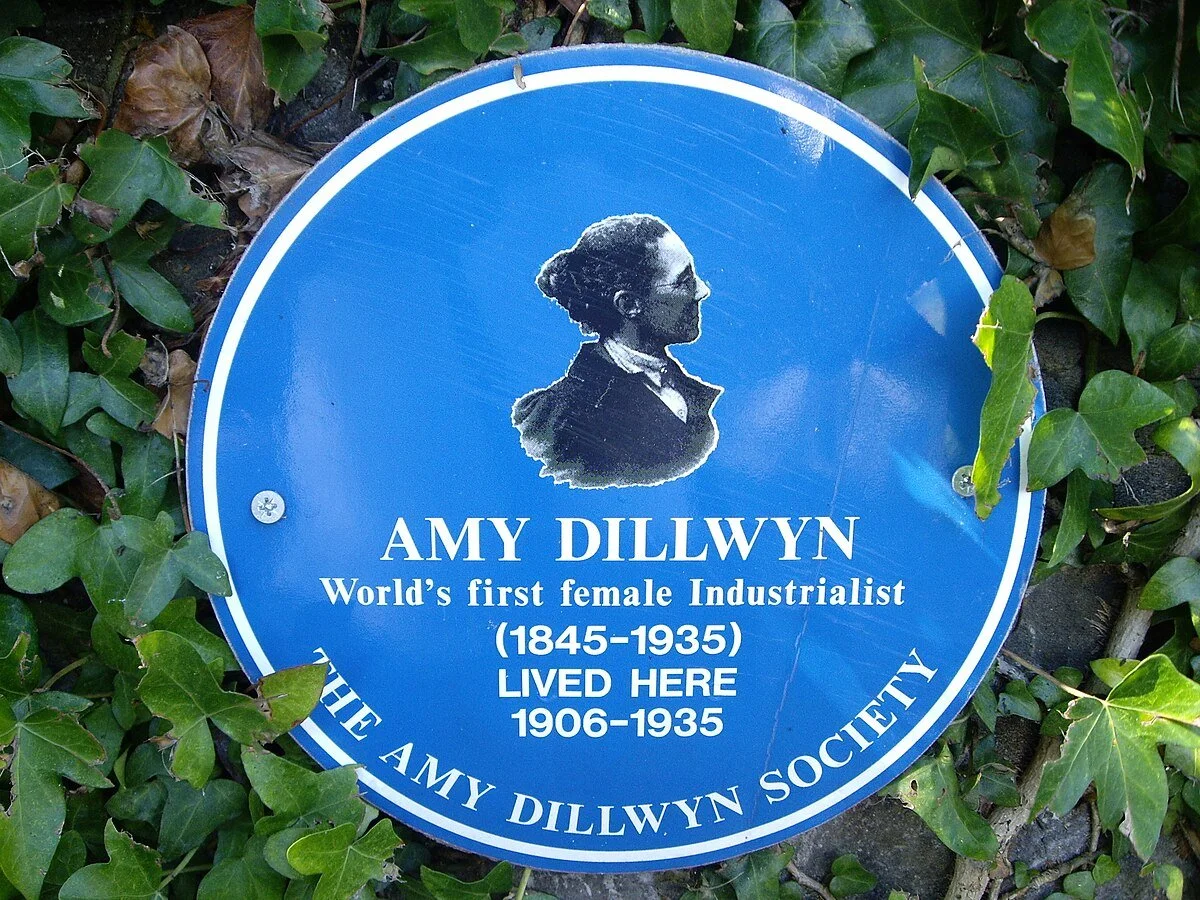
One of its most remarkable residents was Amy Dillwyn, born in Sketty in 1845, who spent much of her childhood at Hendrefoilan.
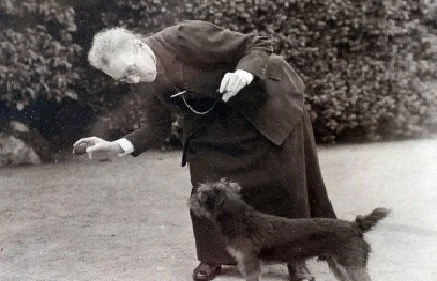
Amy would go on to become one of Wales's most fascinating nineteenth-century figures. A successful novelist, campaigner for women's rights and formidable businesswoman, she took control of her father's heavily indebted spelter works following his death in 1892.
At a time when women were rarely expected to manage major industrial enterprises, Amy successfully turned the business around, overcoming considerable financial difficulties and establishing herself as a respected figure in Swansea's commercial life.
Her unconventional dress, outspoken opinions and fondness for cigars also made her something of a celebrity, and she remains an important figure in the history of women's rights and Welsh industry.
Another prominent family associated with Sketty was the Morris family, whose wealth also came from the industrial development of Swansea.
Sketty Park House was built during the early nineteenth century, using materials from the family's earlier residence at Clasemont in Morriston. Designed by William Jernegan, the mansion stood within extensive grounds and became an important feature of the landscape to the west of the village.
The house was also associated with the distinguished artist and horticulturalist Sir Cedric Morris, who was born in Sketty in 1889.
Morris went on to become an internationally recognised painter and, together with his lifelong companion Arthur Lett-Haines, established the East Anglian School of Painting and Drawing. Among its pupils was the celebrated artist Lucian Freud.
Despite the presence of these wealthy families, Victorian Sketty was by no means exclusively a place of grand houses and ornamental gardens.
Ordinary village life continued around the crossroads, where local residents worked as labourers, gardeners, domestic servants, tradespeople and agricultural workers. The large estates themselves provided employment for gardeners, coachmen, stable hands, housekeepers and other staff, while local shops and services gradually developed to support the growing population.
The contrast between the imposing mansions and the more modest cottages of the village was characteristic of nineteenth-century Swansea, where the enormous wealth generated by industry existed alongside the everyday lives of working people.
Transport improvements also helped bring Sketty closer to Swansea.
The Swansea and Mumbles Railway, which began carrying fare-paying passengers in 1807, ran along the coast below Sketty and provided an important connection between Swansea and Oystermouth. Although the railway did not pass through the village centre, it helped transform travel around Swansea Bay and encouraged the wider growth of communities along the coast.
As roads improved and horse-drawn transport gave way to trams, buses and eventually the motor car, Sketty became increasingly attractive to people who wanted to live outside the busy industrial town while remaining within easy travelling distance of it.
By the beginning of the twentieth century, the village was changing rapidly.
New houses began appearing along the principal roads, and the spaces between the older estates were gradually developed. The Victorian and Edwardian villas that still characterise parts of Sketty were joined by more modest family homes, while the village centre acquired a growing collection of shops and other services.
The First World War brought loss and hardship to the community, as it did to towns and villages throughout Britain. In 1919, one local resident proposed the creation of a memorial hall and library in Sketty to commemorate those who had died, reflecting a growing desire for facilities that could serve the wider community.
The changing fortunes of Swansea's industrial families also brought major changes to the surrounding estates.
In 1919, Swansea Corporation purchased the Singleton Estate, bringing an end to more than a century of private ownership by the Vivian family. The purchase marked the beginning of the transformation of the grounds into the public park and university campus we know today.
Much of Singleton Park was opened to the public in the early 1920s, giving ordinary Swansea residents access to land that had previously formed part of a private country estate.
The University College of Swansea was founded in 1920, and in July of that year King George V visited Singleton Park to lay its foundation stone. In 1923, Swansea Corporation formally transferred Singleton Abbey and 34 acres of land to the college, establishing the foundations of what would become Swansea University's Singleton Campus.
Rooms that had once been used for the private entertainment of the Vivian family became lecture rooms, offices, laboratories and other university facilities.
The development of the park continued in 1926 with the opening of the Educational Gardens, later renamed the Botanical Gardens. Originally created to display useful plants and British flora, they gradually developed into one of Swansea's best-loved public gardens, famous for their colourful borders, greenhouses and collections of unusual plants.
Other improvements followed as Sketty developed into a modern residential district.
Sketty Library opened in 1924, providing local residents with access to books and educational resources, while new schools, community facilities and residential streets continued to appear during the interwar years.
The 1920s and 1930s saw increasing numbers of semi-detached and detached houses constructed on land that had previously formed part of farms or large private estates. Many of these homes reflected the suburban architectural fashions of the period, with bay windows, tiled roofs, front gardens and driveways replacing the older pattern of cottages and country houses.
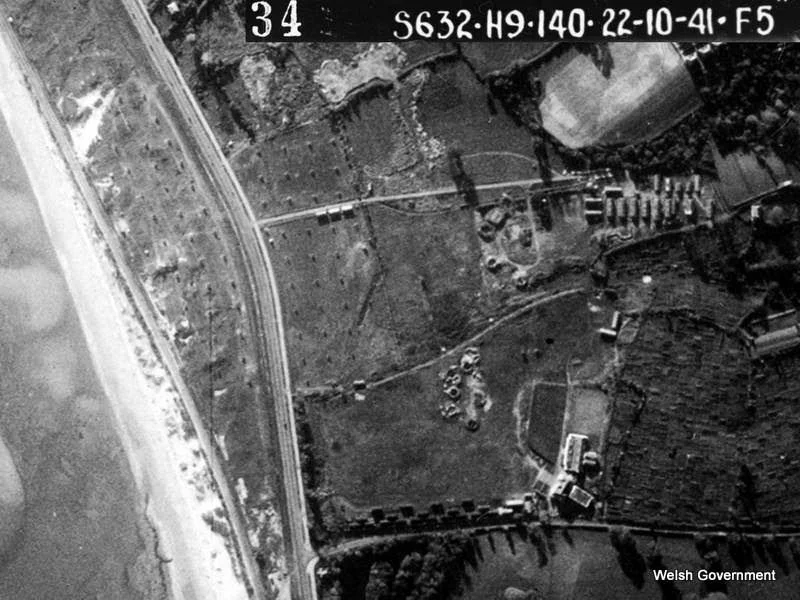
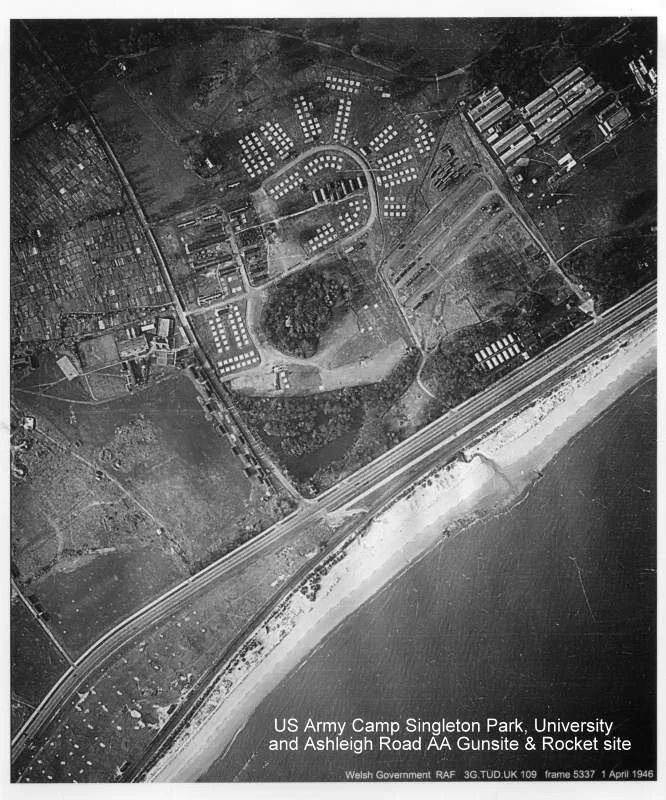
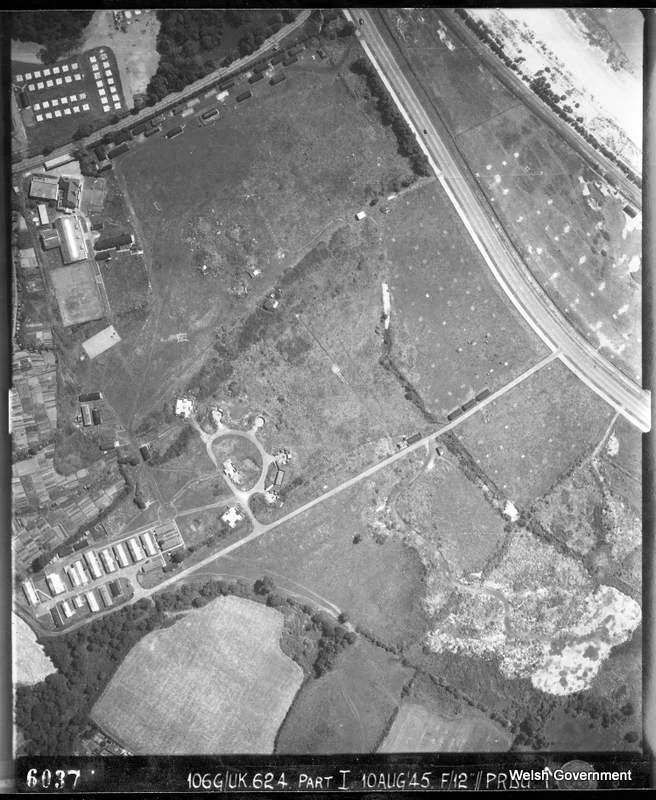
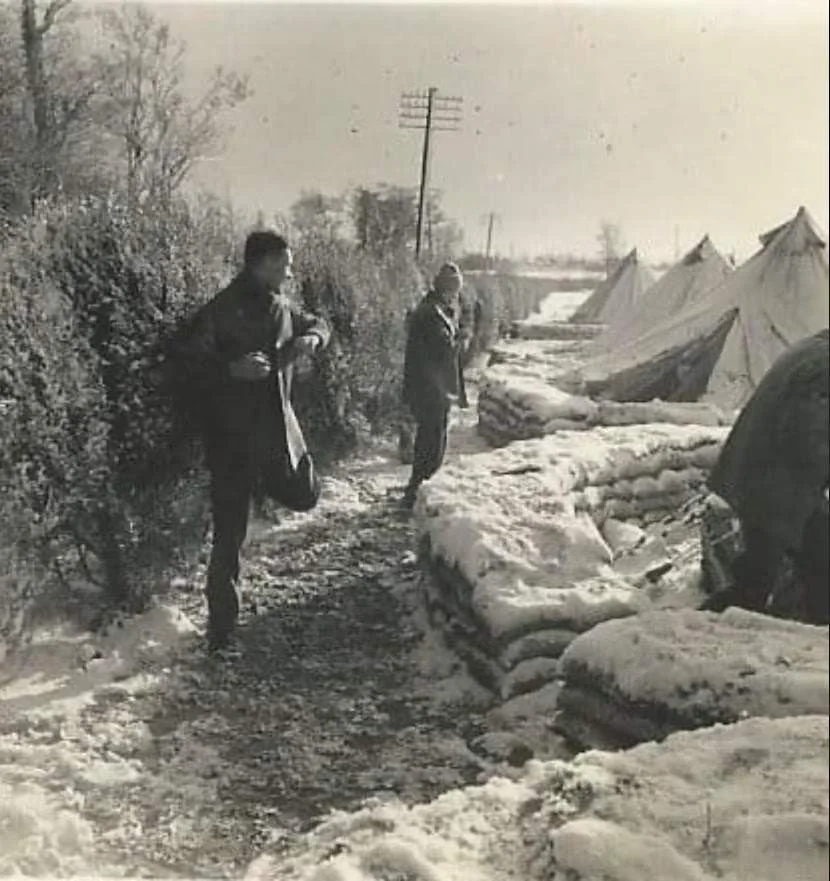
The Second World War brought another period of change. Singleton Park was used for military purposes, and in 1944 more than 1,500 American troops were accommodated in the wider park before departing for the Normandy landings.
In the decades following the war, Swansea faced a growing demand for housing, and Sketty experienced another major period of expansion.
Large areas of former farmland and estate grounds were developed for residential use, while new schools, roads and public facilities were built to serve the expanding population.
Bishop Gore School moved to its present site on De La Beche Road in 1952, occupying land that had once formed part of the grounds of Sketty Hall.
Further west, the development of Sketty Park brought extensive new housing to the area. The construction of council estates and privately built homes dramatically altered the landscape, transforming what had once been open countryside into a substantial residential neighbourhood.
The three eleven-storey blocks of Clyne Court, built in 1963–64, were among the most striking examples of this new approach to housing. Their modern appearance stood in sharp contrast to the older Victorian and Edwardian buildings nearby.
The expansion came at the expense of several historic properties. Sketty Park House, which had stood for more than a century and a half, was demolished in the early 1970s.
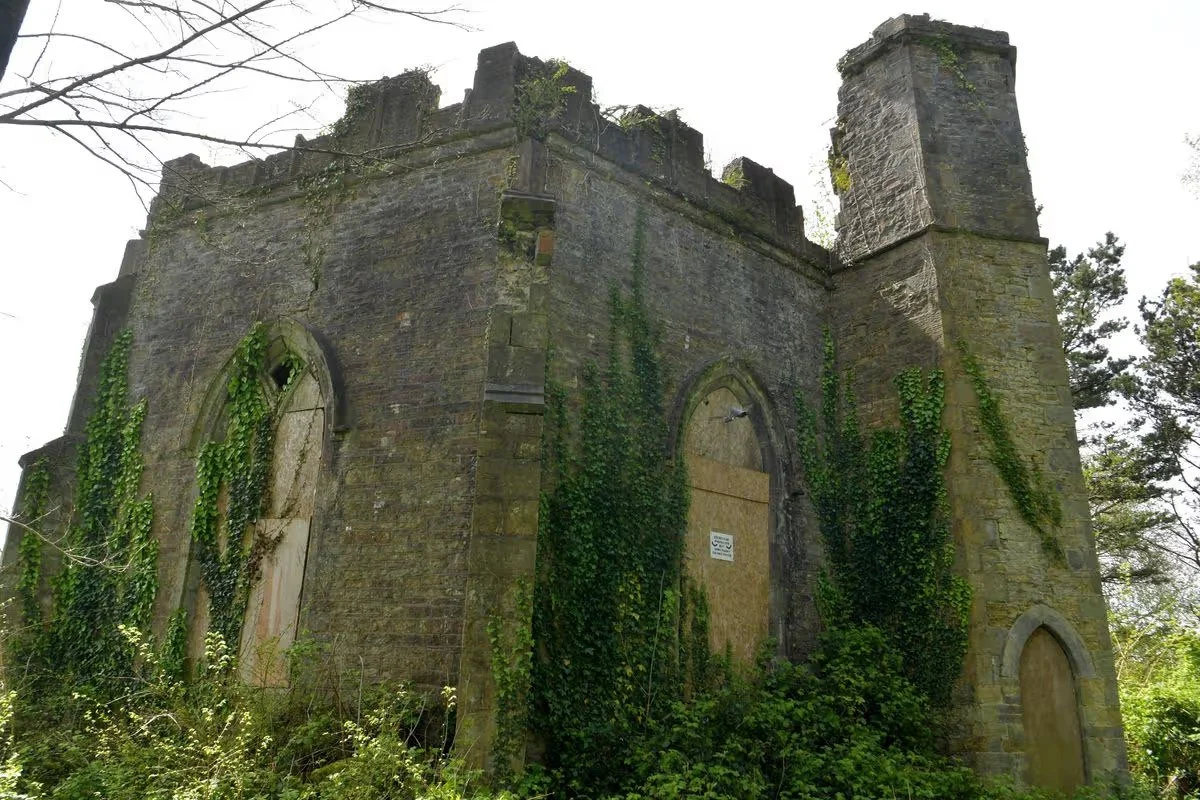
One remarkable reminder of the estate survives, however, in the form of the Gothic Belvedere tower on Saunders Way.
The small octagonal structure, believed to have been designed by William Jernegan, was once an ornamental feature of the Sketty Park grounds. Today, surrounded by modern housing, it appears almost out of place, a curious fragment of a landscape that has otherwise disappeared.
Other grand houses have survived by finding new purposes.
Sketty Hall, which was purchased by Swansea Corporation in 1936, later served as a wartime civil defence headquarters and subsequently as a research centre for the steel industry. Singleton Abbey, meanwhile, remains an important part of Swansea University, its historic architecture providing a striking contrast to the modern campus buildings that have grown around it.
Hendrefoilan House and its grounds also became associated with the university during the twentieth century, with the surrounding estate developed for student accommodation and educational use.
Sketty's residential expansion continued throughout the second half of the century, gradually joining together areas that had once been separate farms, estates and small settlements. The village became part of a much larger suburban landscape, although its historic centre retained a distinct identity.
Today, it is easy to overlook just how much of Sketty's history remains visible in the streets around us.
St Paul's Church and the Stewart Hall recall the influence of the Vivian family and the Victorian enthusiasm for churches and education. Sketty Hall and Singleton Abbey tell the story of the industrial fortunes that helped shape Swansea. The chapels reflect the importance of religion and the Welsh language, while the Belvedere tower is a reminder of the great estates that once occupied much of the surrounding countryside.
Even the names of familiar roads preserve traces of the past. Vivian Road and Dillwyn Road commemorate families whose influence extended far beyond Sketty, while De La Beche Road recalls the distinguished geological family connected to the Dillwyns.
Perhaps most remarkably, the busy crossroads at the heart of modern Sketty occupies the centre of a settlement that was surrounded by open countryside and connected to Swansea by winding roads.
The village has changed almost beyond recognition since those days. Farmland has become housing, private gardens have become public parks, and the great fortunes of Swansea's industrial age have given way to new communities and generations of residents.
Yet the history of Sketty is not simply the story of grand houses and wealthy families. It is also the story of the people who lived and worked here: the farmers who cultivated its fields, the servants who maintained its estates, the children who attended its schools, the shopkeepers who served its residents and the generations of families who have made the village their home.
From its medieval origins to its emergence as one of Swansea's most established residential neighbourhoods, Sketty has continually adapted while retaining a character of its own.
And for anyone willing to look a little more closely, there are still reminders of that remarkable history around almost every corner.
Sources and further reading
The following historical records, books, archival collections and heritage surveys provide further information about Sketty's development, from its medieval origins to the modern suburb. Some older publications are available to read online, while others can be consulted through libraries and archives.
Medieval records, place names and early books
Morgan, Richard (2018). Place-Names of Glamorgan: Database of Place-Name Forms and Sources. Welsh Place-Name Society. Records Enesketti (1319), le Skette (1400), Sketty (1583) and other historical forms. Read the database (PDF).
Calendarium Inquisitionum Post Mortem sive Escaetarum, Volume I (1806), p. 294. Early published calendar of medieval property records containing the 1319 reference to Enesketti. Read the digitised volume.
Clark, George Thomas. Cartae et Alia Munimenta Quae ad Dominium de Glamorgancia Pertinent, Volume III (1891), p. 1067. Collection of medieval documents relating to Glamorgan, including the early spelling Enesketi. View the digitised book.
Calendar of Inquisitions Post Mortem, Volume XVIII, No. 307 (1400). Records the road leading from Swansea's West Street towards le Skette and le Blakepull. The entry is dated 6 July 1400. Original manuscript: The National Archives, C 137/17/71b, membrane 32. Read the published record.
Calendar of Inquisitions Post Mortem, Volume XXII (1425). A further medieval record mentioning the route associated with Sketty and Blackpill. Read the published record.
Baker, Charles, and Francis, G. G. (eds.) (1870). Surveys of Gower and Kilvey. Includes a 1583 reference to Sketty, cited on p. 98 by Morgan. View the library catalogue record.
Powell, Gabriel. Survey of the Lordship of Gower (1764), edited by Bernard Morris (2000). Includes Sketty Llwyd alias Brinkenol, p. 113. Find the published edition.
Yates, George (1799). A Map of the County of Glamorgan. An important early map showing Sketty Hall and the surrounding landscape. View the historical map record.
Malkin, Benjamin Heath. The Scenery, Antiquities and Biography of South Wales (1804; second edition 1807). Volume II of the 1807 edition, p. 490, includes a historical reference to Arthur's Stone as the Stone of Sketty. View a digitised first edition.
Morgan, Thomas (1912). Place-Names in Wales. An early study of Welsh place-name origins, including an interpretation connecting Sketty with Ceti's Stone. Read a transcription of the book.
Jones, Josiah Thomas (1867). Geiriadur Bywgraffyddol o Enwogion Cymru, Volume I, p. 167. Contains the historical spelling Yscetty. View the digitised Welsh-language book.
Rees, Thomas, and Thomas, John (1872). Hanes Eglwysi Annibynol Cymru, Volume II, “Yr Ysgetty”. A detailed contemporary history of Nonconformist worship in Sketty, including an extract from a 1741 diary, the first chapel of 1770 and the opening of Bethel in 1842. Read the complete Welsh-language chapter.
Wilson, John Marius (1870–1872). The Imperial Gazetteer of England and Wales. Contains a geographical and statistical description of Victorian Sketty. Read the historical gazetteer entry.
Robinson, Peter Frederick (1837). Domestic Architecture in the Tudor Style. Includes architectural material relevant to the reconstruction of Singleton Abbey by its architect. Read the digitised book.
Archaeology, historic buildings and estates
Cadw/ICOMOS. Register of Parks and Gardens of Special Historic Interest in Wales: Singleton Park and Sketty Hall. A detailed heritage assessment covering the Vivian and Dillwyn estates, Singleton Abbey, Swiss Cottage, Sketty Hall and the development of the park. Read the full report (PDF).
Jones, Richard Scott (2011). The Bible College of Wales, Lower Sketty, Swansea: Archaeological Desk-Based Assessment and Standing Building Recording. Archaeological report discussing Sketty's name, early settlement, historical maps and local estates. Read the report (PDF).
Dulley, Andrew. A Gazetteer of Localities in the West Glamorgan Area. West Glamorgan Archive Service. Historical information on settlements, estates and local administrative boundaries, including Sketty. View the gazetteer (PDF).
Royal Commission on the Ancient and Historical Monuments of Wales. Singleton Abbey. Official archaeological and architectural record for the former Vivian residence. View Coflein record.
Cadw. St Paul's Church, Sketty. Information on the church, its Victorian origins and Gothic Revival architecture. Read the Cadw information.
Royal Commission on the Ancient and Historical Monuments of Wales. St Paul's Church, Sketty. Official historic building record. View Coflein record.
Cadw. Stewart Hall and No. 68. Listed Building No. 11756. Official description of the former village school, built in 1853 to designs by Henry Woodyer. Read the listed building report.
Swansea Museum. Sketty Hall, Swansea, 1852. Historic illustration and information about the residence, including material relating to Lewis Weston Dillwyn. Explore the museum record.
Heneb / Historic Environment Record. Hendrefoilan House. Archaeological and architectural information about the Dillwyn family's nineteenth-century residence. View the historic environment record.
Royal Commission on the Ancient and Historical Monuments of Wales. Sketty Park House. Record of the Morris family's mansion, built around 1810 and demolished around 1973. View Coflein record.
Cadw. Belvedere, Sketty Park. Listed Building No. 11761. Official record of the surviving Gothic tower associated with the former Sketty Park estate. Read the listed building report.
Churches, families and community life
Uniting Church Sketty. History of Bethel United Reformed Church. History of Sketty's Welsh Congregational community and its nineteenth-century chapel. Read the church history.
Uniting Church Sketty. A Brief History of Sketty Methodist Church. Covers the emergence of Methodism in Sketty, earlier meeting places and the opening of the Wesleyan chapel in December 1876. Read the church history.
Uniting Church Sketty. Sketty Methodist War Memorial. Includes the names of local servicemen and transcriptions of contemporary newspaper reports from the First World War and its aftermath. Read the memorial research.
Swansea University. The Vivians. Historical account of the industrial family, Singleton Abbey and the establishment of the University College of Swansea. Read the university history.
Swansea University Archives. The Life of Amy Dillwyn Through Archival Sources. Original documents and historical research covering Amy Dillwyn's literary, industrial and personal life. Explore the archival exhibition.
Royal Commission on the Ancient and Historical Monuments of Wales. Amy Dillwyn (1845–1935). Biographical research on the Sketty-born novelist and industrialist. Read the biographical article.
Amgueddfa Cymru – Museum Wales. Sir Cedric Morris (1889–1982). Biographical and collection information relating to the Sketty-born painter. Explore the museum collection.
Transport, twentieth-century Sketty and local studies
Transport for Wales. The Swansea, Oystermouth and Mumbles Railway. History of the railway, which began carrying fare-paying passengers in 1807. Read the railway history.
Royal Commission on the Ancient and Historical Monuments of Wales. Clyne Court Tower Blocks, Sketty. Architectural record documenting the three eleven-storey residential blocks constructed in 1963–64. View Coflein record.
Royal Institution of South Wales (2018–2019). Swansea History Journal / Minerva, Volume 26. Contains studies of Sketty in the nineteenth century and the historic road between Swansea and Mumbles. Available through local reference libraries and the West Glamorgan Archive Service. View journal contents.
Royal Institution of South Wales (2025–2026). Swansea History Journal / Minerva, Volume 33. Includes Roderick Evans's “Sgeti: Sketty – History in Names” and Andrew Hayman's study of early Swansea photographers associated with Sketty. Available from Swansea Museum and local reference collections. View journal contents.